If you enjoy this blog post, then you'll love my new book Experiencing English Literature. With dedicated chapters on teaching novels, plays and poetry as well as teaching generative writing, sentence-stems and essay structure, it is filled with actionable strategies ready for the classroom. You can order it right now HERE ! I recently shared... Continue Reading →
Tell Me Your Favourite Word…: Generative Retrieval for English
There is sometimes, I feel, an assumption that retrieval practice in the English classroom begins and ends with quotation gap fills or basic factual recall. Those making this assumption are often the same people suggesting retrieval practice doesn't work for English. It does, of course. And it's crucial to remind ourselves that you can't think... Continue Reading →
Using Cornell Notes: A Video Tutorial for Students
The system of Cornell note taking is a strategy I have used for a long time, since university at least but possibly before (A Level is such a distant memory I can’t quite recall!). I use them now when listening to interesting podcasts, reading especially important articles, completing online courses like with Massolit, or as... Continue Reading →
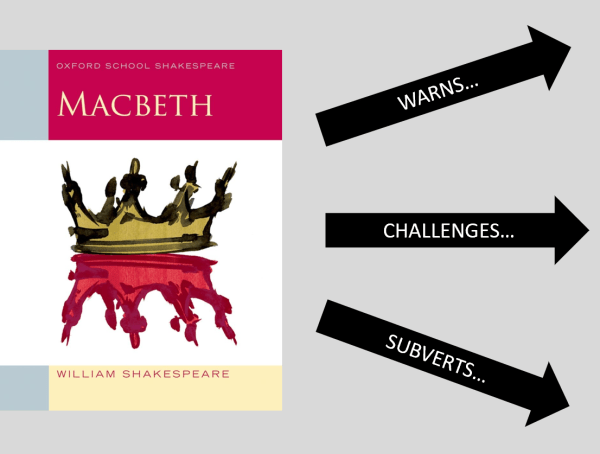
But, what does the text do?
If you enjoy this blog post, then you'll love my new book Experiencing English Literature. With dedicated chapters on teaching novels, plays and poetry as well as teaching generative writing, sentence-stems and essay structure, it is filled with actionable strategies ready for the classroom. You can order it right now HERE ! Yesterday, I posted... Continue Reading →
What Can Radio 1 Teach Us About the Literary Canon?
Yesterday, I taught a lesson about the literary canon to Year 10. One of the ways I tried to explain how the canon functions, an idea inexorably abstract to a group of 14 year olds, is through the example of Radio 1. Now, this isn't done out of any desire to increase engagement or play... Continue Reading →
The Literary Hinterland: A Lesson I Love…
Each year I'm fortunate enough to be able to offer my Y10 students a short enrichment course that lasts 6 weeks and which I title, after Bob Eaglestone's superb book, Doing English. The aim of this enrichment course is to get the students thinking much more conceptually about literature and its study, asking questions such... Continue Reading →
A Student Guide: How to Reference for A Level Coursework
The below guide as to how to write references for A Level coursework uses the MLA citation style. This is of course not the only citation style and is not inherently better than others, but the key is to be consistent. Italics Vs Quotation Marks If you are citing any complete work, for example, a... Continue Reading →
Teaching Compare and Contrast via Passing References
Most, if not all, English Literature specifications at GCSE and A Level require the student to make points of connection between two texts, something either explicitly stated in the specification or implied through the format of the question. Given its prevalence, making apt and stylistically fluid textual comparisons is an aspect of essay writing that... Continue Reading →
Analysing the News in The Handmaid’s Tale
There are certain moments in a text that could easily be passed by without much thought or attention, but when dwelled over reveal themselves to be surprisingly, teasingly, significant. There is just such a moment in Atwood's The Handmaid's Tale, copied below and taken from Chapter 14: First, though, a little context: this takes place... Continue Reading →
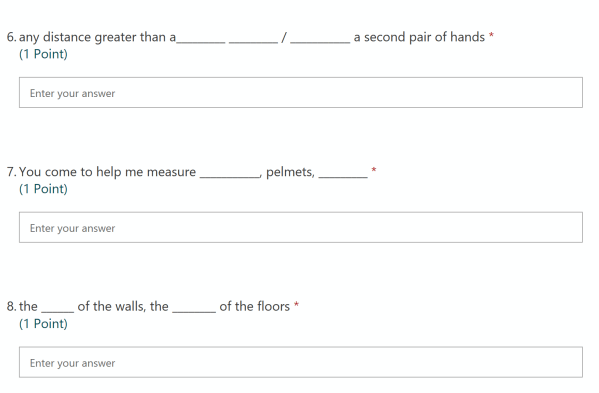
Not Just MCQs and Knowledge Quizzes: Generating Learning with Microsoft Forms
Back in February of last year, I started to play around with using Microsoft Forms, mostly for knowledge quizzes and basic recap of material covered in lessons. I had used it for a few homeworks and was quite happy with the results. It allowed me to identify at a glance any major misconceptions across the... Continue Reading →